

The Influence of Jean-François Millet on Vincent van Gogh
When people think of Vincent van Gogh, they often picture vibrant sunflowers, swirling skies, and expressive landscapes. His bold colors and emotional brushwork have made him one of the most celebrated artists in history. Yet behind Van Gogh's unique artistic vision stood another remarkable painter whose influence is sometimes overlooked: Jean-François Millet.
The French Realist painter had a profound impact on Van Gogh's life and work. More than simply inspiring his compositions, Millet shaped Van Gogh's understanding of what art could be and whom it should represent.
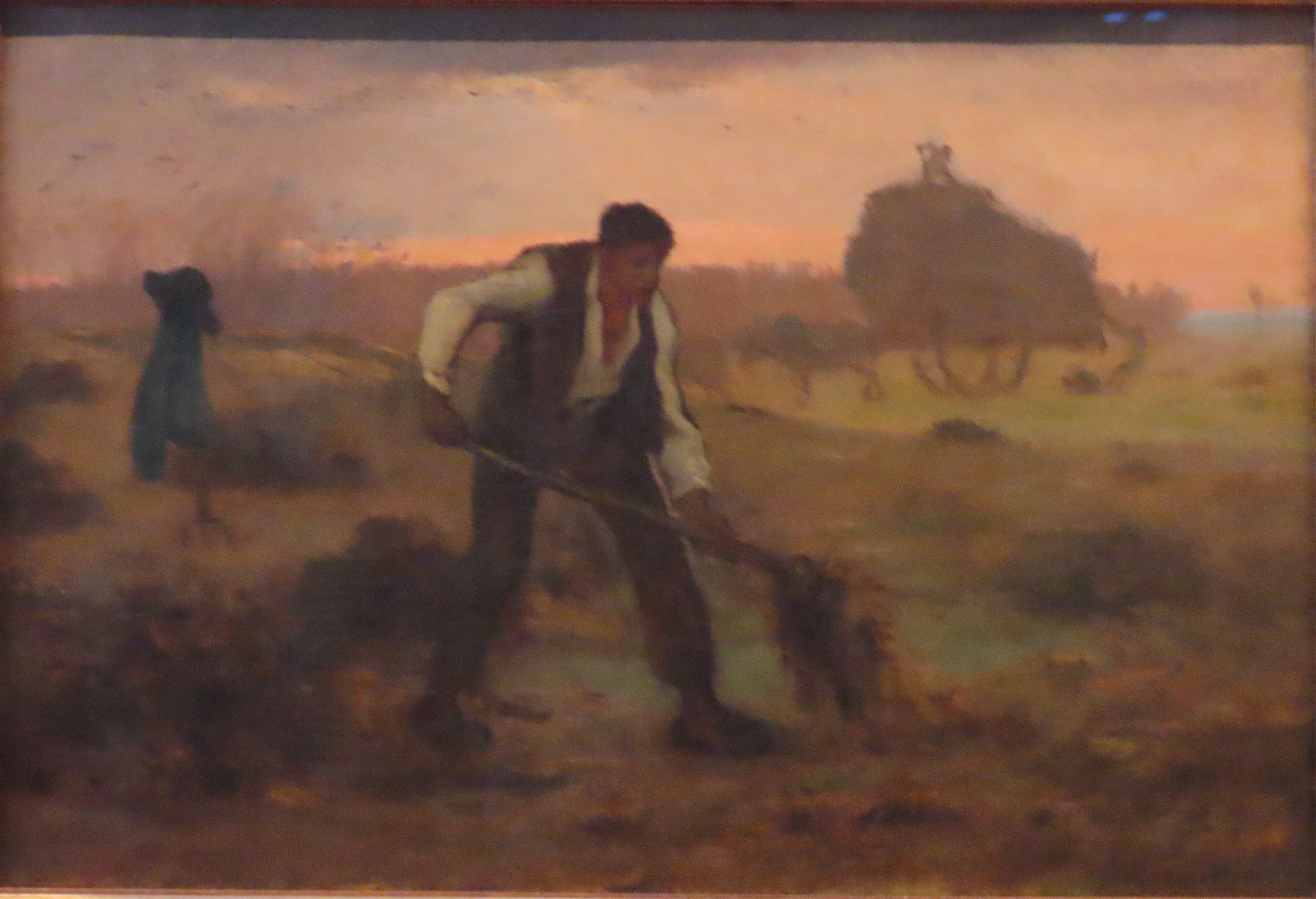
Jean-François Millet was born in 1814 in the farming village of Gruchy, Normandy, France. Raised in a family of farmers, he understood rural life from personal experience. This background became the defining feature of his art. Instead of painting kings, mythological figures, or grand historical scenes, Millet chose to portray farmers, shepherds, and laborers. His paintings celebrated the dignity of everyday work and the quiet beauty of life in the countryside.
At a time when academic art often focused on wealth and heroism, Millet's subjects were ordinary people performing ordinary tasks. Paintings such as The Gleaners, The Angelus, and The Sower transformed scenes of agricultural labor into powerful expressions of humanity. Millet believed that beauty could be found in hard work, and a close connection with nature.
These ideals deeply resonated with Vincent van Gogh.
Before becoming an artist, Van Gogh worked as an art dealer and later as a missionary among coal miners in Belgium. His experiences brought him into close contact with working-class communities and strengthened his compassion for those whose lives were often overlooked. When he discovered Millet's paintings, Van Gogh found an artist who shared these values.
In his letters to his brother Theo, Van Gogh frequently expressed his admiration for Millet. He regarded him as a master who painted ordinary people with respect and empathy. Van Gogh once referred to Millet as "Father Millet," a term that reflected not only admiration but also gratitude. For him, Millet was a spiritual guide whose work demonstrated that art could honor the lives of everyday people.
Millet's influence is clearly visible in Van Gogh's own paintings. During his early years as an artist, Van Gogh focused on peasants, weavers, and rural families. One of his first major works, The Potato Eaters (1885), portrays a farming family gathered around a simple meal after a day's labor. Like Millet's paintings, it avoids romanticizing rural life while emphasizing the dignity and resilience of ordinary people. As Van Gogh's style evolved, his colors became brighter and his brushwork more expressive, but his choice of subjects remained closely connected to Millet's example. Wheat fields, sowers, olive groves, reapers, and rural cottages became recurring themes throughout his career. For Van Gogh, these scenes represented life, hope, renewal, and humanity's enduring relationship with nature.
One of the most fascinating aspects of Van Gogh's admiration for Millet is his series of paintings based on Millet's originals. While recovering at the Saint-Paul-de-Mausole asylum in Saint-Rémy, Van Gogh recreated several of Millet's compositions, including The Sower, First Steps, The Reaper, and Noonday Rest.
These works were not intended as exact copies. Instead, Van Gogh treated them as interpretations. He compared the process to a musician performing a piece composed by someone else. The composition remained the same, but the performance reflected the artist's own emotions and personality.
This is especially evident in Van Gogh's versions of The Sower. Millet's original presents a farmer scattering seeds across a field in muted earth tones, emphasizing realism and the dignity of labor. Van Gogh retained the same subject but transformed it with brilliant yellows, vivid blues, and a glowing sun that fills the landscape with energy. His version becomes not only a tribute to Millet but also a deeply personal meditation on hope, growth, and renewal.
Despite their stylistic differences, Millet and Van Gogh shared a common belief that art should reveal the beauty of ordinary life. Both artists found meaning in simple moments, whether it was a farmer sowing seeds, a family sharing a meal, or workers resting after a long day in the fields. They believed that these scenes reflected universal human experiences and deserved to be celebrated through art.
The relationship between Millet and Van Gogh reminds us that influence is not imitation. Van Gogh never tried to become another Millet. Instead, he learned from the older artist's compassion, philosophy, and choice of subjects while developing a style that was entirely his own. By combining Millet's respect for rural life with his own emotion, Van Gogh created some of the most memorable paintings in Western art.
Today, both artists continue to inspire audiences around the world. Their artistic connection is a testament to the enduring value of learning from those who came before us and finding our own voice in the process. In many ways, every field of golden wheat that Van Gogh painted carries a quiet echo of Millet's vision. It is a reminder that great art often begins with admiration, grows through understanding, and blossoms into something entirely new.